Last updated 2026-07-25
TL;DR
There is no Monterey, California program that gives free parking to businesses because they hold a liquor license. That claim appears to be a mix-up with unrelated local parking validation programs and general confusion about what a liquor license actually controls. Liquor licenses regulate alcohol sales, not parking. Check the City of Monterey's own parking pages and California ABC directly before you plan around this.
Is there really a free parking perk tied to having a liquor license in Monterey?
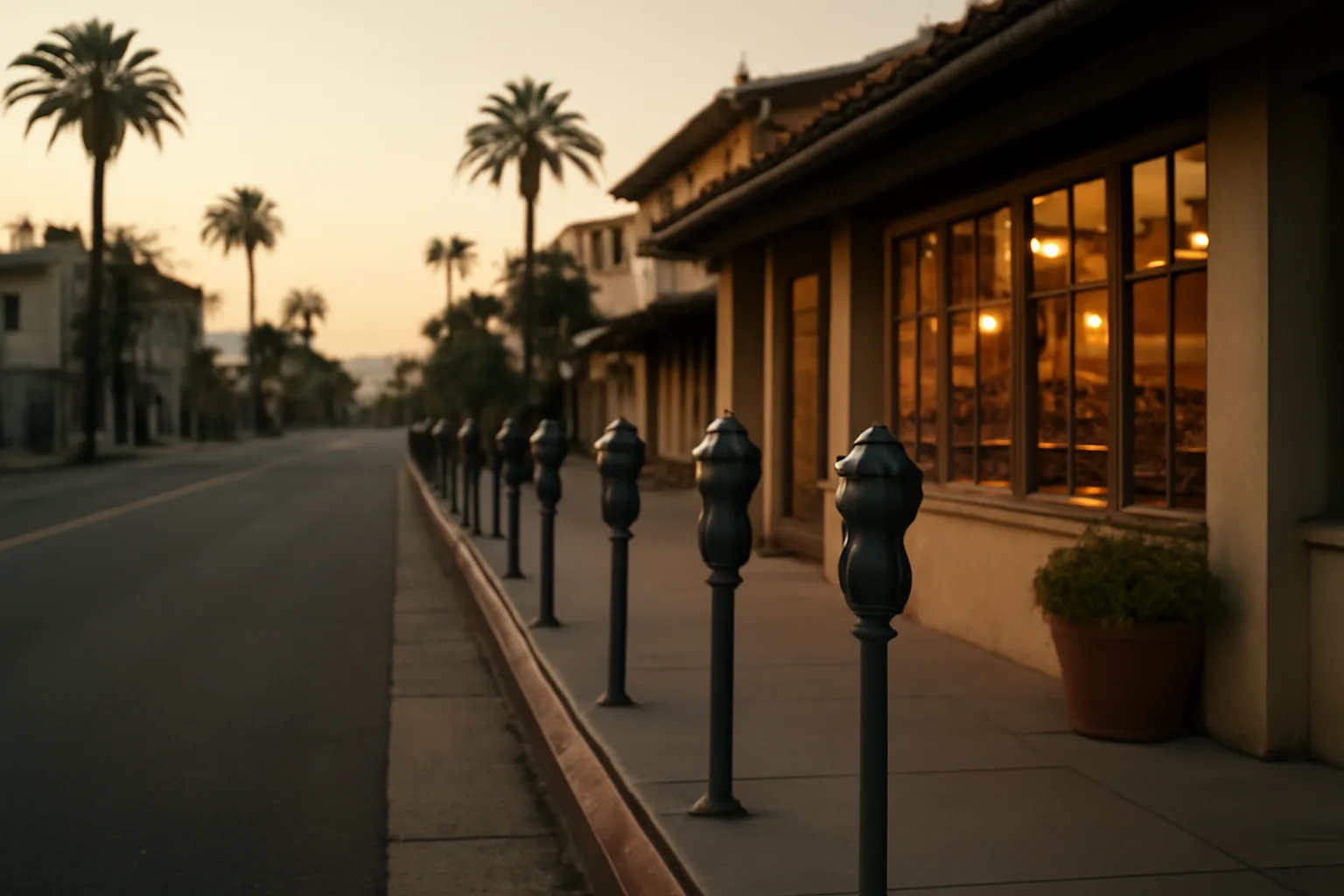
No. There's no ordinance, ABC rule, or City of Monterey program that grants free parking to a business because it holds an on-premise liquor license. This search term shows up because people conflate a few unrelated things: downtown validation programs some California cities run for merchants generally, confusion between city business permits and state ABC licenses, and the general (accurate) idea that having a full liquor license makes your location more valuable, which sometimes gets loosely translated into 'perks.' The City of Monterey runs its own parking program through its Public Works, Parks and Transportation Division, including downtown garages, meters, and permit parking zones. Any validation or discount program tied to those facilities is set by the city, not by the Department of Alcoholic Beverage Control (ABC), and would apply based on being a downtown business or event participant, not based on liquor license type [1]. If you're a restaurant or bar owner in Monterey trying to plan parking for staff or customers, the right move is to call the city's parking division or check current downtown parking rules directly, and treat your liquor license planning as a completely separate track.
So what does a California liquor license actually control?
A California liquor license controls who can sell and serve alcohol, what type (beer and wine only, full liquor, on-sale versus off-sale), and under what conditions, hours, and location. It has nothing to do with parking spaces, curb management, or municipal permits for vehicles. California ABC issues licenses under the Alcoholic Beverage Control Act, and the most common on-sale license for a full-service restaurant or bar is the Type 47 (on-sale general, eating place) or Type 48 (on-sale general, public premises, bona fide bar) [2]. Beer and wine only restaurants typically hold a Type 41. Each type has its own fee schedule and its own rules, and none of them mention parking. Separately, cities do regulate parking requirements as part of their zoning and conditional use permit process for restaurants and bars. That's where parking actually intersects with opening a bar in Monterey: your city planning department may require a minimum number of on-site or nearby parking spaces before it issues a conditional use permit (CUP) for on-sale alcohol at your location. That's a local land-use requirement, not an ABC benefit. Confirm current parking-space requirements with the City of Monterey Planning Division before you sign a lease that depends on a specific seat count.
How much is a liquor license, really?
Cost depends entirely on the state, the license type, and whether you're getting a brand-new license from the state or buying an existing one on the resale market in a quota county. There is no single national number, and anyone quoting you one flat figure without asking your state and county is guessing. In California, ABC's own original license fees for common on-sale types run in the low thousands of dollars when a license is directly available from the state, but that's the easy scenario. Many California counties, including Monterey County, are subject to the state's population-based quota system under Business and Professions Code Section 23817, meaning new general on-sale licenses (Type 47/48) are only issued when the county's population supports another slot [3]. When a county is at or over quota, the only way in is buying an existing license on the private resale market, where prices are set by supply and demand between license holders, sometimes running from the tens of thousands to well over $100,000 depending on the county and license type. ABC does not set or cap resale prices. Beyond the license fee itself, budget for the ABC application fee, a local business license, possible CUP costs, legal or consulting help, and carrying costs while you wait for approval. Most on-premise retailers (restaurants and bars) do not need a separate federal TTB permit the way alcohol producers and importers do, but confirm your specific business structure against federal requirements before you assume you're exempt, since certain manufacturing or wholesale activity does trigger federal permitting under 27 CFR Part 1 [4].
How much is a liquor license in Florida?
Florida's system works completely differently from California's, which is exactly why 'how much is a liquor license' can't have one answer. Florida's Division of Alcoholic Beverages and Tobacco (ABT) issues several quota-based license series, most notably the 4COP (quota) license that allows full liquor, beer, and wine sales for consumption on premises, and quota licenses are tied to county population under Florida Statutes Section 561.20 [5]. In counties under quota, Florida issues new licenses through an annual lottery when population growth opens up new slots, and the state filing fee for that new quota license itself is set by statute and is comparatively modest, in the low thousands of dollars range; confirm the exact current fee with Florida ABT before budgeting [5]. But quota licenses in built-out counties like Miami-Dade or Broward routinely resell on the private market for well over $100,000, sometimes into the several hundred thousand dollar range, because there simply aren't new ones being issued fast enough for demand. Florida also has non-quota options. A 2COP license (beer and wine only) doesn't require the lottery and is far cheaper and faster to get, which is why a lot of new restaurants start with beer and wine service and add full liquor later once they can afford or win a quota license. If your business model depends on Florida's quota system, budget the resale price of an existing license into your opening costs, more than the state filing fee. For state-specific detail, see our Florida bar guide.
How do you get a liquor license, step by step?
The process follows a similar shape almost everywhere, even though the paperwork and names differ by state. First you confirm your entity is formed and your lease or purchase agreement for the location is signed, because most state ABC applications require a specific physical address tied to the license. Then you apply with your state's alcoholic beverage authority for the correct license type, pay the application and license fees, and go through a background check on the owners or officers. Most states also require a local sign-off step: a public notice period, a hearing before a local ABC board or city council, or a zoning/CUP approval, before or alongside the state approval. California ABC, for instance, requires a 30-day public posting period at the premises and requires certain protest procedures to run before a license can be issued [2]. Florida requires local zoning approval as part of its process as well [5]. Once approved, you'll typically need to complete responsible beverage service training for certain staff (California's mandatory RBS program under Business and Professions Code Section 25680 is a good example), get your final inspection, and pay any outstanding fees before the license is actually issued and you can start pouring. Realistic total timelines run anywhere from a couple of months in a simple non-quota state to six months or longer in a quota county with protests or a lottery cycle. Build that timeline backward from your target opening date, not forward from when you file.
How do you get a bartending license, and is that even a thing?
There is no national 'bartending license.' What most people mean by this is one of two very different things: a responsible beverage service (RBS) certification for the bartender as an individual, or a business-level liquor license held by the establishment. These are not interchangeable, and confusing them is one of the more common mistakes new hires and new owners make. Many states require individual servers and bartenders to complete an approved alcohol server training course and, in some cases, register in a state database. California's RBS program, established under Business and Professions Code Section 25680, requires most on-premise servers and their managers to complete ABC-approved training and pass a certification exam within 60 days of their hire date. Other states run similar programs under different names (TIPS certification, ServSafe Alcohol, and so on), and some states have no individual certification requirement at all, leaving it up to the employer. Getting this individual certification is fast and cheap, usually a few hours online and a fee well under $50, and it has nothing to do with the business's own liquor license application, which is a separate, much longer, and much more expensive process run through the state ABC agency.
Can you serve alcohol without a liquor license?
No, not for a business selling alcohol to the public. Selling or serving alcoholic beverages without the license required by your state is a criminal or administrative violation almost everywhere, and it exposes you to fines, forced closure, and in some cases criminal charges against the owners. There are narrow exceptions. Private, non-commercial events where alcohol isn't sold (a genuinely free open bar at a private party, for example) generally don't require a license because no sale is occurring, though some states still regulate this depending on the venue and whether it's a public accommodation. BYOB arrangements exist in some states and localities under specific corkage or BYOB permit rules, which is a different regulatory lane than a full on-sale license. And catering or off-site event alcohol service typically requires its own separate caterer's permit or temporary event permit from the state ABC authority, even if the caterer already holds a license at their home location. If you're opening a restaurant or bar and planning to pour before your license is finalized, don't. Federal and state alcohol authorities treat unlicensed sales seriously, and getting caught mid-application can delay or kill the license you're trying to get in the first place.
Can anyone take the bar exam, and does that relate to liquor licensing at all?
This question gets asked in liquor-license research because of the word 'bar,' but it refers to something completely unrelated: the exam attorneys take to become licensed to practice law. It has zero connection to alcohol licensing. To sit for the bar exam in most U.S. states, a candidate generally needs to have graduated from an ABA-accredited law school (a handful of states allow alternate paths like reading the law), pass a character and fitness review, and meet the specific state bar's own eligibility rules. The American Bar Association tracks accreditation standards, and each state's bar admission authority, like the State Bar of California, sets its own exam eligibility requirements . If you landed here looking for information on practicing law, see our California bar page; if you're actually researching a business named 'bar,' you're in the right place with this liquor licensing content instead.
How do quota systems affect what a license actually costs?
Quota systems are the single biggest reason liquor license prices vary so wildly from one county to the next, even within the same state. Understanding quota is more useful for budgeting than any flat 'average price' figure, because averages hide the difference between a $2,000 new-issue fee and a $150,000 resale price for the exact same license type. California ties the number of general on-sale (Type 47/48) licenses available in a county to that county's population, under a ratio set out in Business and Professions Code Section 23817, roughly one license per set population increment, with the ratio and mechanics detailed in ABC's own licensing guidance [3]. When a county has hit its ratio, ABC stops issuing new general licenses there, and the only path in is the resale market or waiting for a priority queue opening. Florida's quota counties work similarly under Florida Statutes Section 561.20, with new quota licenses released through an annual lottery tied to population growth, and existing quota licenses transferable on the open market at whatever price a buyer and seller agree to [5]. Non-quota license types (beer and wine only, in both states) sidestep this entirely, which is why many new operators start there and upgrade later. Our quota and transfers content covers how to check whether your specific county is under quota before you commit to a lease that assumes a full liquor license.
What should you actually plan for around parking and your lease?
Even though liquor licenses don't grant parking perks anywhere, parking absolutely affects whether your CUP or liquor license application gets approved in the first place, so it deserves real planning even if the 'free parking' framing is a myth. Before signing a lease, confirm three things with your city planning department: the minimum on-site or nearby parking ratio required for a restaurant or bar use at your square footage, whether your specific address is grandfathered from older parking requirements (common in older downtown buildings), and whether any nearby public garage or lot counts toward satisfying that ratio under a shared-parking agreement. Monterey, like many coastal California cities with tight downtown footprints, has historically allowed some in-lieu parking fee or shared-parking arrangements for downtown businesses, but the specifics change, so confirm current rules with the city rather than assuming what applied a few years ago or in a different city applies to you now. If your lease is contingent on getting a liquor license and your license application is contingent on a parking-compliant CUP, build enough buffer time into your opening date for both approvals to land, more than the ABC side. A lot of 'why is this taking so long' frustration for new operators traces back to a local zoning or parking issue, not the state license itself.
How should you build a realistic timeline back from your opening date?
Work backward from the day you actually want to pour your first drink, and pad every step, because almost every delay in this process comes from somewhere other than the ABC's stated processing time. Start with your target opening date and subtract: staff RBS/TIPS certification (days, easy to compress at the end), final inspection and license issuance (weeks), any required public posting or protest period (30 days minimum in California under ABC's posting rule [2]), local CUP or zoning hearing scheduling (can be one meeting cycle or several months depending on your city's calendar), and the base state processing time for your license type (widely variable, and ABC and Florida ABT both publish current estimated processing windows worth checking directly before you finalize a date). If you're in a quota county and need a resale license, add the time to actually find a seller, negotiate, and complete the ABC transfer process, which can run several months on its own. Building this backward, rather than assuming a fixed number of weeks from filing, is the single most useful thing you can do to avoid opening day panic. If you want a structured way to map every state-specific step against your lease and opening date, that's exactly what our $199 State Liquor License Roadmap is built to do; it's a planning tool, not legal advice, and you should still confirm final requirements with your state ABC authority.
Where do you go from here?
Start with your state's ABC authority website for the actual current fee schedule, quota status for your county, and processing time estimates, since those are the numbers that change year to year and vary by jurisdiction. Then check your city's planning or zoning department for parking, CUP, and local permit requirements, because that's where 'Monterey parking' and 'liquor license' actually intersect, just not the way the free-parking rumor suggests. If you're comparing license types generally, our liquor overview and bar guide walk through the differences between beer-and-wine, full on-sale, and quota versus non-quota licenses in plain terms. If you're specifically in Florida, our Florida bar page and Florida bar member search tool cover that state's particular quota and lottery mechanics. And if Spanish-language resources are more useful for your team, see bares. Whatever you do, don't plan your opening around a parking perk that doesn't exist. Plan it around the real, confirmable steps: license type, quota status, CUP and zoning sign-off, and a processing timeline you've verified directly with your state ABC authority.
Frequently asked questions
Does Monterey, California give free parking to businesses with a liquor license?
No. There is no city or state program tying free parking to liquor license holders in Monterey. The City of Monterey manages parking separately through its own parking and transportation division, and any downtown validation or permit programs apply based on being a local business or event, not based on your ABC license type. Confirm current parking rules directly with the city.
How much is a liquor license?
It depends entirely on your state, county, and license type; there's no single figure. Non-quota beer-and-wine licenses can cost a few hundred to a few thousand dollars in state fees. Full on-sale licenses in quota counties, like many in California and Florida, can resell for tens of thousands to over $100,000 because supply is capped by population ratios, not by demand.
How do I get a liquor license for my restaurant or bar?
Confirm your license type and whether your county is under quota, apply through your state's ABC or ABT agency with your signed lease address, complete any required public posting or local zoning/CUP approval, pass background checks, and complete staff alcohol server training before your license is issued. Timelines run from a couple of months to over six months depending on quota and local hearings.
How do I obtain a liquor license if my county is at quota?
You generally can't get a brand-new one directly from the state; instead, you buy an existing license from a current holder on the resale market, then apply to your state ABC agency to transfer it into your name and location. Resale prices are set by the market, not the state, and can run well into six figures in dense counties.
How much is a liquor license in Florida?
Florida's quota (4COP) licenses have a modest state filing fee in the low thousands when won through the annual lottery in an under-quota county, but resell for well over $100,000 in built-out counties like Miami-Dade. Non-quota 2COP (beer and wine) licenses are far cheaper and don't require the lottery. Confirm current fees with Florida's Division of Alcoholic Beverages and Tobacco.
How can I get a liquor license faster?
Start with a non-quota license type (beer and wine only) if your business model allows it, since these skip lottery and quota waiting entirely. Also confirm your local CUP and zoning approval early and in parallel with your state application, since local hearing delays, not state processing time, cause most of the slowdown.
How do I get a bartending license?
There's no national bartending license. What most people need is a state-approved responsible beverage service (RBS) certification, like California's RBS program under Business and Professions Code Section 25680, usually a short online course and exam costing under $50. This is separate from the business's own liquor license, which is a much longer and more expensive process.
Can you serve alcohol without a liquor license?
Not for a commercial sale to the public; that's illegal almost everywhere and can bring fines, closure, or criminal charges. Narrow exceptions exist for genuinely free private events with no sale occurring, and for licensed caterers operating under a separate temporary event or caterer's permit. Never start pouring commercially before your license is actually issued.
Can anyone take the bar exam?
This refers to the legal profession's bar exam, unrelated to liquor licensing. Most states require graduation from an ABA-accredited law school and a character and fitness review before you're eligible to sit for the exam; a few states allow alternate paths. Each state bar sets its own specific eligibility rules.
Does a liquor license require a minimum number of parking spaces?
The state ABC agency itself typically doesn't set parking requirements; that's usually a local city or county zoning requirement tied to your conditional use permit, not your state alcohol license. Confirm your city's specific parking ratio for restaurant or bar uses before signing a lease that assumes a certain seat count.
What's the difference between a liquor license and a bartending certification?
A liquor license is issued to the business by the state ABC agency and controls whether that location can legally sell alcohol at all. A bartending or server certification is issued to an individual employee and shows they've completed responsible service training. You need the business license in place before certified staff can legally pour anything.
How long does it take to get a liquor license before opening day?
Realistic ranges run from about two months in a simple, non-quota state with no local hearing delays, to six months or more in a quota county requiring a resale transfer, public posting period, and a zoning or CUP hearing. Build your lease and staffing plans backward from a confirmed, padded timeline, not the fastest-case scenario.
Sources
- California Department of Alcoholic Beverage Control, Licensing overview: Type 47 and Type 48 are California's common on-sale general licenses for restaurants and bars, and ABC requires a public posting period as part of licensing
- California Business and Professions Code Section 23817: California's on-sale general license quota is tied to county population ratios
- 27 CFR Part 1, Basic Permit Requirements (Federal Alcohol Administration Act): Federal basic permit requirements under 27 CFR Part 1 apply primarily to alcohol producers, importers and wholesalers, distinct from state on-premise retail licensing
- Florida Statutes Section 561.20: Florida's quota liquor license system ties the number of new licenses in a county to population growth
- California Business and Professions Code Section 25680: California requires most on-premise alcohol servers and managers to complete approved RBS training and certification