Last updated 2026-07-26
TL;DR
Mobile bars almost never qualify for a standard on-premise license. Most states require a caterer's permit, special event permit, or temporary event license tied to a licensed base of operations, plus a separate approval for each venue or event. Costs and rules vary heavily by state ABC authority, so confirm with your state ABC authority before you book gigs.
What license do you need for a mobile bar?
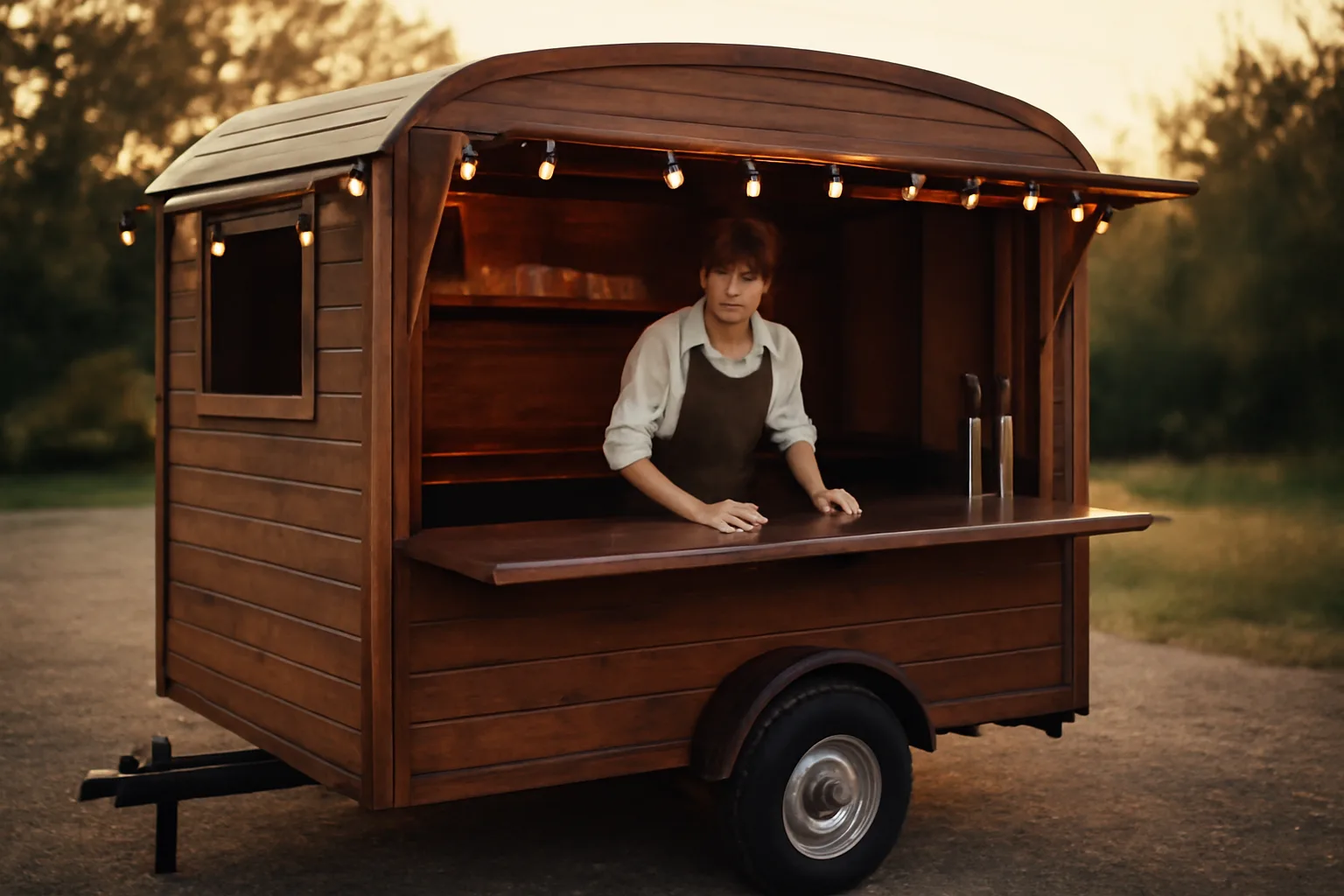
A mobile bar (a trailer, truck, cart, or trailer-hitched setup that pours drinks at weddings, private parties, and corporate events) almost never fits under a standard on-premise retail liquor license, because those licenses attach to one fixed physical address. Instead, most states put mobile bar operators into one of three buckets: a caterer's liquor license (sometimes called a caterer's permit), a special event permit issued per date and per venue, or a temporary/limited license tied to a nonprofit or festival sponsor. Which bucket applies depends entirely on your state ABC (Alcoholic Beverage Control) authority, and the rules genuinely differ state to state. New York, for example, issues a distinct "catering establishment license" under its Alcoholic Beverage Control Law that lets a caterer serve alcohol at events it does not own [1]. California instead uses Type 58 (Caterer's Permit), which a licensee attaches to an existing on-sale license so they can pour off-site at approved events [2]. Neither of these is something you can generally get as a brand-new business with no other license first; in most states, the caterer's authority rides on top of an existing retail license, which is why so many mobile bar businesses either partner with a licensed bar/restaurant or pursue their own base license before they can go mobile. The honest starting point: call your state ABC authority (or check its caterer/mobile-vendor licensing page) before you sign a single event contract. Rules on where you can pour, whether you need a permit per event, and whether alcohol must be purchased through a licensed wholesaler all vary by state, county, and sometimes city. If you're building a license plan around a specific opening date and specific event calendar, our State Liquor License Roadmap ($199, one-time) maps the license type, base permit, and per-event approvals your state actually requires, in the order you need to file them.
Can you serve alcohol without a liquor license?
No. Serving or selling any alcoholic beverage, even a single cash-bar drink at a private event, without the license or permit your state requires is illegal almost everywhere in the U.S., and it exposes both the pourer and the event host to fines, license denial down the road, and in some states criminal liability. Under the Federal Alcohol Administration Act, businesses engaged in importing, distilling, rectifying, blending, or wholesaling distilled spirits, wine, or malt beverages must hold a federal basic permit from the Alcohol and Tobacco Tax and Trade Bureau, as set out at 27 U.S.C. § 203 [3], and states layer their own retail and event licensing on top of that. There's a narrow exception in a lot of states for truly private, non-commercial gatherings where no one pays for drinks and no business is charging a fee, but a mobile bar business charging a client for a bartending package, a package that includes alcohol, almost always crosses into licensed territory. Some states also allow a client to supply their own alcohol ("BYOB" catering) while the mobile bar company provides only labor and equipment, which sidesteps the licensing requirement for the bar company but shifts liability and legal exposure onto the host. That workaround is popular with newer mobile bar operators precisely because it lets them operate before they've secured a license, but it is not a permanent substitute for real licensing if you want to build a real business, and some states restrict or regulate it too. Bottom line: if money changes hands for alcohol service, or your business is the one pouring, get a permit. "Nobody checked last time" is not a compliance strategy.
How do you get a liquor license for a mobile bar business?
The path generally runs through four steps, though the order and exact names of the licenses shift by state. First, form your business entity and get a federal EIN, since almost every state license application asks for one. Second, check whether your state requires an underlying retail liquor license before it will issue a caterer's or mobile permit; in states like California, you typically need to hold or partner with a Type 41, 47, or 48 on-sale license before Type 58 (Caterer's Permit) becomes available [2]. Third, apply for the caterer's, special event, or temporary permit itself, which usually requires proof of insurance, a list of planned events or venues, and sometimes a local health permit for the vehicle or trailer. Fourth, budget time for local sign-off: most cities and counties require a separate business license, a mobile food/beverage vendor permit, fire marshal inspection for propane or generators on the trailer, and sometimes a special event permit from the venue's jurisdiction for each date you pour. A realistic timeline is weeks to several months, not days. State ABC processing alone can run anywhere from a few weeks to 90-plus days depending on the state and whether a public notice or protest period applies; local approvals often stack on top of that. If your opening date or first booked event is fixed, back-plan from that date and build in slack, because event and wedding season backlogs at state ABC offices are common in spring and early summer. See our guides on bar licensing basics and liquor license categories generally for how these permit types relate to standard on-premise licenses.
How much does a liquor license cost for a mobile bar?
There is no single national number, and anyone who quotes you one flat figure is guessing. Costs stack in layers: a state application/filing fee, an annual state license or permit fee, a local business license fee, and often a per-event fee for each date you're booked to pour. As a range across states that publish fee schedules, annual state liquor license fees for various on-premise or caterer categories commonly run from roughly a few hundred dollars to several thousand dollars, and application/filing fees are frequently separate from and additional to the license fee itself. California's ABC fee schedule, for instance, lists specific dollar amounts by license type and by the priors-population formula for original licenses, all published directly on its fee schedule page [4]. Since these numbers change and differ by exact license class and location, confirm the current fee with your state ABC authority before budgeting, rather than relying on a secondhand figure. Beyond the license fee itself, plan for insurance (liquor liability coverage is often required and commonly runs in the low thousands of dollars annually depending on coverage limits and claims history, though carriers price this individually), a bond in some states, and possibly a consultant or attorney if your state's application is complex. For a mobile operation specifically, add per-event permit fees where required; some states and cities charge a flat fee per single-day special event permit, separate from your base annual license.
How much is a liquor license in Florida?
Florida's liquor license costs depend heavily on which license series you need and, for the most common restaurant/bar license (the quota-based "4COP"), on your county's population-based quota allocation, which can make quota licenses far more expensive to acquire on the open market than the state's own filing fee. Florida's Division of Alcoholic Beverages and Tobacco (ABT), part of the Department of Business and Professional Regulation, issues and regulates these licenses and publishes license types and fee information on its official licensing pages [5]. Non-quota license types, such as certain beer-and-wine-only licenses or specialty licenses for caterers, tend to have lower, published state fees, while quota liquor licenses (full liquor, on-premise) in counties where the quota is already filled often only become available by buying an existing license from another holder, which can run into tens of thousands of dollars or more depending on the county and market, a private transaction price, not a state fee. Florida issues one new quota license per population increase of a set amount in each county, a formula set out in Florida Statutes Chapter 561 [6]. For a mobile bar operating in Florida specifically, the relevant path is usually a caterer's license or a special event license issued by ABT, tied to your business's existing licensure, rather than a full quota license. Confirm current fee amounts and quota availability in your specific county directly with Florida's Division of Alcoholic Beverages and Tobacco, since quota status changes as counties grow and as licenses trade hands. For general Florida license background, see our florida bar guide.
Do you need a bartending license to work a mobile bar?
In most states, no formal "bartending license" exists at all; what most states actually require is a responsible beverage service (RBS) certification for the individual pouring, not a license in the sense of a government-issued permit to be a bartender. A handful of states make this certification mandatory (for example, some require TIPS, ServSafe Alcohol, or a state-specific RBS course for anyone serving alcohol commercially), while others make it optional but strongly recommended, because it's a common defense point in liability cases and often required by liquor liability insurers regardless of whether the state mandates it. The TTB itself does not license individual bartenders; federal permitting under the Federal Alcohol Administration Act, at 27 U.S.C. § 203, applies to businesses that import, produce, or wholesale alcohol, not to the person pouring at an event [3]. So "getting your bartending license" in practice usually means one of two things: completing an RBS/alcohol server certification course (often a few hours online, costing roughly $10 to $50 depending on the provider and state), or, if you mean learning bartending as a craft, enrolling in a private bartending school, which is a skills course, not a government license. Check your specific state's alcohol beverage control website for whether RBS certification is mandatory for anyone pouring at licensed events; several states require it specifically for staff working under caterer's permits and special event licenses, which is exactly the license category most mobile bars operate under.
Can anyone take the bar exam?
This question usually comes from search overlap, but it's worth answering directly since people researching "bar" licenses sometimes land here by accident: the bar exam (the test that licenses attorneys to practice law) is unrelated to liquor licensing. Eligibility to sit for a state bar exam is set by that state's board of bar examiners or supreme court, and generally requires graduation from an ABA-accredited law school (with some states allowing alternative paths like law office study), plus passing a character and fitness review administered by that state's bar admissions agency. If you're researching mobile bar liquor licensing and landed here searching "bar exam," you're likely looking for either your state's ABC (Alcoholic Beverage Control) authority for liquor licensing, or the state bar association for legal admission, two completely different "bar" systems that happen to share a name. Our bar and bares guides cover the liquor licensing side; for attorney licensing, each state's bar association website (for example, see the florida bar and florida bar member search resources, or the california bar equivalent) is the correct source, not a state ABC office.
What's the difference between a caterer's permit and a special event permit?
A caterer's permit is generally an ongoing authorization attached to your existing liquor license that lets you pour alcohol at different off-site locations over time, as long as each event meets your state's notice or approval requirements. California's Type 58 works this way: it's held alongside a base on-sale license and used repeatedly across many events per year [2]. A special event permit, by contrast, is typically a one-time or short-window authorization tied to a single date, single venue, and often a single event sponsor (sometimes required to be a nonprofit), and it does not carry forward to your next booking. For a mobile bar business that works dozens of weddings and corporate events a year, a caterer's-style permit (where your state offers one) is usually the more practical long-term structure, since it avoids refiling a new application for every single date. States that don't offer a true caterer's permit category often route mobile bar operators through repeated special event filings instead, which means more paperwork per event but a lower barrier if you're just testing the business model before committing to a full liquor license. Either way, check whether your state requires the permit holder (you) to purchase alcohol only from state-licensed wholesalers or distributors rather than retail stores; this is a common requirement attached to both caterer's and special event permits and a frequent compliance trip-up for new mobile bar operators.
Do you need a different license for every state or city you operate in?
Generally, yes. Liquor licensing in the U.S. is state-regulated, not federally uniform, and most states also layer county or city rules on top. A mobile bar license or permit issued in one state almost never transfers to another state, and even within one state, some cities require their own local special event or vendor permit in addition to the state ABC approval. This becomes a real operational headache for mobile bar businesses that book weddings across state lines, a common business model for trailer-based operators near state borders. If you're planning to work events in, say, both Texas and Oklahoma, or both New Jersey and Pennsylvania, budget for two entirely separate license applications, two fee schedules, and two sets of compliance rules, not one license that follows you. The federal basic permit requirement under 27 U.S.C. § 203, where applicable to your business structure, does not substitute for state licensing either; it addresses a different layer of regulation entirely (production, importation, wholesale activity) [3]. This is also where a lot of mobile bar businesses get themselves into billing and quota trouble: booking an out-of-state event first and only checking local licensing requirements afterward. Confirm licensing in every state and municipality on your event calendar before you sign contracts there, not after.
How do you obtain a liquor license as a first-time mobile bar owner?
Start by identifying your state's ABC authority (every state has one, though the name varies: Division of Alcoholic Beverages and Tobacco in Florida, Alcoholic Beverage Control in California, State Liquor Authority in New York, and so on) and reading its specific pages on caterer permits, special event permits, and mobile vendor rules, since "mobile bar" is rarely a license category by that exact name. Next, figure out whether your state requires a base retail license before it will grant a caterer's or event permit. If it does, and you don't already hold or have access to one through a partnership, that base license becomes your real first hurdle, and it may come with its own quota restrictions, local zoning approval, and a much longer timeline than the event permit itself. Then build your application packet: business entity documents, EIN, insurance certificates (liquor liability at minimum), local business license, health department approval for the mobile unit if food or ice handling is involved, and a clean record for any principal owner (most states run background and financial checks on license applicants). Submit, then expect a wait; processing time varies by state and by how backed up the ABC office is that season. If the sequencing and timeline feel overwhelming, especially when you're trying to back-plan from a signed venue contract or grand opening date, a structured roadmap built for your specific state and license type removes a lot of the guesswork. That's exactly what our State Liquor License Roadmap is for: a one-time $199 plan that lays out the license type, base permit requirements, and filing order for your state, back-planned from your target date. It's not legal advice and it doesn't replace your state ABC authority's own requirements, but it does turn a confusing multi-agency process into a checklist.
Frequently asked questions
How much is a liquor license?
It depends entirely on the state, license type, and sometimes county quota status. Annual state fees can run from a few hundred dollars to several thousand, and quota-restricted on-premise licenses purchased on the open market (common in Florida and other quota states) can cost tens of thousands of dollars or more. Confirm exact current fees with your state ABC authority.
How do you get a bartending license?
Most states don't issue a formal government "bartending license." What's usually required or recommended is a responsible beverage service (RBS) certification course, such as TIPS or ServSafe Alcohol, which takes a few hours and costs roughly $10 to $50. Some states mandate it for anyone pouring under a caterer's or special event permit; check your state ABC authority's requirements.
How can I get a liquor license?
Identify your state's ABC authority, determine which license category fits your business (on-premise, caterer's, special event, or mobile vendor), confirm any local zoning or health approvals, and submit the application with required documents like your EIN, insurance certificates, and background information. Processing time and requirements vary significantly by state.
How do you obtain a liquor license?
You apply through your state's Alcoholic Beverage Control (or equivalent) authority, not the federal government, though a federal basic permit under 27 U.S.C. § 203 applies separately if you're producing, importing, or wholesaling alcohol. The state application typically requires entity formation documents, an EIN, local approvals, insurance proof, and payment of application and license fees that vary by state and license type.
Can anyone take the bar exam?
The bar exam licenses attorneys, not bartenders or liquor license holders, and it's unrelated to alcohol licensing. Eligibility is set by each state's board of bar examiners and generally requires graduating from an accredited law school (a few states allow law office study instead) plus passing a character and fitness review.
How do you obtain a liquor licence (UK/Canada spelling)?
If you're in the U.S., the process runs through your state ABC authority regardless of spelling. If you're in the UK, alcohol licensing runs through your local council under the Licensing Act 2003; if you're in Canada, each province has its own liquor control authority. This article covers U.S. state-based licensing specifically.
How much is a liquor license in Florida?
It depends on the license series. Non-quota licenses (beer/wine, caterer's, specialty) have published state fees that are relatively modest, while full quota on-premise ("4COP") licenses in counties where the quota is filled often only trade hands privately for tens of thousands of dollars or more. Confirm current fees and quota status with Florida's Division of Alcoholic Beverages and Tobacco.
Can you serve alcohol without a liquor license?
No, not legally, if money changes hands for the alcohol or the service around it. Nearly every state requires a license or permit to sell or serve alcohol commercially, even at a single private event with a hired bartender. A narrow exception exists in some states for truly free, non-commercial gatherings, but a paid mobile bar service doesn't qualify.
What license does a mobile bartending business need?
Most mobile bartending businesses need a caterer's permit or special event liquor license issued by their state ABC authority, often tied to an existing base retail license, plus local business licensing and sometimes a per-event permit for each venue. The exact category and name vary by state, so check your specific state ABC authority's caterer/mobile vendor rules.
Does a caterer's permit cover every event automatically?
Usually not automatically. Most states require notice or a filing for each specific event even under an ongoing caterer's permit, specifying the date, venue, and sometimes expected attendance. Check your state's specific notice requirements; missing the filing window for an event is a common compliance mistake.
Can a mobile bar buy alcohol from a regular liquor store?
Generally no. Most states require licensed caterers and special event permit holders to purchase alcohol through licensed wholesalers or distributors, not retail stores, even though the retail price might look cheaper. Buying retail for resale under a license can violate your state's ABC rules and put your permit at risk.
How long does it take to get a mobile bar liquor license?
Timelines vary widely by state, often anywhere from a few weeks to 90 days or more for the underlying state approval, plus additional time for local business licensing, health inspections, and insurance setup. Back-plan from your first booked event or opening date and build in extra time, especially during busy wedding season months.
Sources
- New York State Legislature, Alcoholic Beverage Control Law: New York issues a distinct catering establishment license under its ABC Law that permits alcohol service at events the licensee doesn't own
- California Department of Alcoholic Beverage Control, License Types: California's Type 58 Caterer's Permit is attached to an existing on-sale license to allow off-site event alcohol service
- U.S. Code, Federal Alcohol Administration Act basic permit requirement: Federal law under 27 U.S.C. § 203 requires a basic permit for businesses importing, distilling, rectifying, blending, or wholesaling distilled spirits, wine, or malt beverages
- California Department of Alcoholic Beverage Control, License Fees Schedule: California publishes specific license fee amounts by license type and original-issuance population formula
- New York State Liquor Authority, Alcoholic Beverage Control Law Section 63 (license fees): New York's Alcoholic Beverage Control Law sets license fee amounts by license type and county
- Florida Division of Alcoholic Beverages and Tobacco, Licensing: Florida's Division of Alcoholic Beverages and Tobacco issues and regulates alcohol licenses including quota and specialty categories
- Florida Legislature, Florida Statutes Chapter 561: Florida's quota license formula issues one new quota license per set population increase in each county
- American Bar Association, Comprehensive Guide to Bar Admission Requirements: Bar exam eligibility is set by each state's board of bar examiners and generally requires graduation from an ABA-accredited law school plus a character and fitness review