Last updated 2026-07-26
TL;DR
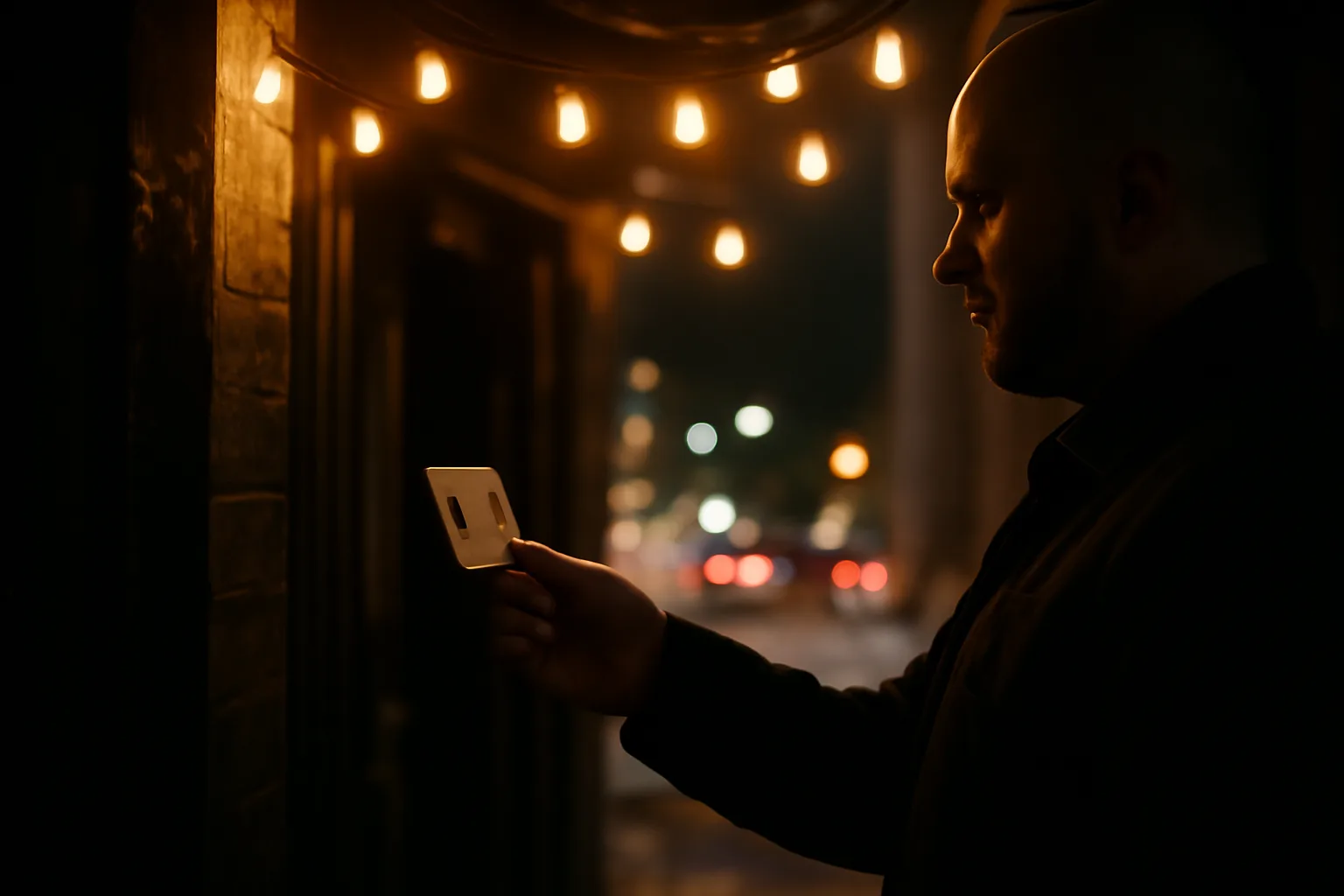
There are two different "expired license" questions here. If your ID is expired, most bars will legally refuse you entry or service, since bartenders need a valid ID to check age. If the bar itself is operating on an expired liquor license, that's a compliance violation for the business, not you, though the bar can be fined, shut down, or lose its license entirely.
can you go to a bar with an expired license?
It depends which "license" you mean, and the answer is different for each. If you're asking about your own ID (driver's license or state ID) being expired, the honest answer is: legally risky, and most bars will just say no. Bartenders and door staff are trained to reject expired identification because state alcohol control agencies generally require age verification through a currently valid, unexpired government ID. An expired ID doesn't reliably prove your current legal identity or that you're still using a valid document, so it fails the test even if the birthdate on it clearly shows you're over 21. If you're asking whether you can patronize a bar whose liquor license itself has expired or lapsed, that's a different problem, and it's really the bar's problem, not yours as a customer. A bar operating without a valid, current license is out of compliance with its state ABC (Alcoholic Beverage Control) authority. You won't get arrested for walking in and ordering a drink, but the establishment is exposed to fines, suspension, or forced closure, and if regulators catch it mid-violation, your night out could get cut short by a compliance sweep. We cover the business side of this in depth over on our state guides hub, since keeping a license current is one of the most basic and most commonly missed compliance tasks bar owners face.
will a bar serve you with an expired ID?
Almost never, and that's by design. Most state alcohol control laws require sellers to check for a valid, unexpired form of identification before serving alcohol to anyone who appears under a certain age (commonly 30 or under, though the specific age threshold is set state by state). An expired ID doesn't meet that bar because it no longer counts as valid proof under most state statutes governing retail alcohol sales. There's also liability at stake. If a bartender serves someone using an expired ID and that person turns out to be underage, the bar can lose its affirmative defense in an enforcement action. States that offer a "reasonable reliance" defense (meaning the seller checked ID and reasonably believed it was valid) generally require the ID to be current. An expired document undercuts that defense immediately, so most bars train staff to reject expired IDs outright, no exceptions, even for someone who's obviously 45 years old. Some states allow a grace period for IDs that expired very recently (sometimes tied to renewal backlogs during things like DMV slowdowns), but that's not universal and not something a bartender is required to honor. If your ID is expired, the safest move is a passport or a renewed ID, not an argument at the door.
what happens if a bar's liquor license expires?
A bar operating on a lapsed license is committing a licensing violation, and the consequences scale with how long the lapse lasts and whether the state ABC catches it through inspection, complaint, or renewal audit. Most states require liquor licenses to be renewed on a set annual or biennial cycle, and selling alcohol after that date without a renewal or a valid extension is treated as unlicensed sale of alcohol in the eyes of the state agency. New York, for example, sets license terms and renewal obligations directly in its Alcoholic Beverage Control Law, and operating past expiration without a valid renewal filing puts a licensee outside that authorization entirely (N.Y. Alcoholic Beverage Control Law Section 111) [1]. Penalties vary widely by state, and you should confirm exact figures with your state ABC authority, but common consequences include monetary fines, mandatory suspension of sales, and in repeat or aggravated cases, permanent revocation. Some states also expose the business owner to criminal liability for operating without a license, separate from any administrative fine. This is why smart operators track their renewal window as tightly as their opening date. We built our whole planning approach around exactly this kind of deadline stacking; see the license roadmap builder if you're trying to map renewal dates against a real calendar instead of guessing. As a customer, you're not going to get in legal trouble for buying a drink at a bar that happens to be non-compliant. But if the state pulls the plug mid-shift (which does happen during active enforcement actions), you might find yourself finishing your night somewhere else.
can you serve alcohol without a liquor license?
No, not legally, not in any state. Selling or serving alcoholic beverages without an active, appropriate liquor license is illegal everywhere in the United States, and the specific penalties (fines, criminal charges, forced closure) are set by each state's alcohol control statute, not by federal law. The TTB (Alcohol and Tobacco Tax and Trade Bureau) regulates federal permits for producers, importers, and wholesalers under the Federal Alcohol Administration Act, but the retail-level license (the one that lets a bar or restaurant pour drinks to customers) comes entirely from your state and often your county or city as well (27 U.S.C. Section 203) [2]. There's a narrow distinction between "serving" in a licensed commercial sense and unlicensed private hosting. If you're pouring wine at your own dinner party for guests, you don't need a license, because you're not selling. The moment money changes hands, or the event is open to the public, or you're operating as a business, you're in licensed territory. Pop-up bars, temporary events, and catered functions often need a special one-day or temporary event permit even if the operator already holds a different license elsewhere; this trips up a lot of expanding restaurant groups who assume their existing license covers a satellite event.
how much is a liquor license?
There's no single national number, and anyone who gives you one flat figure is oversimplifying. Liquor license costs depend on your state, your license type (beer and wine only versus full liquor, on-premise versus off-premise), your local jurisdiction, and in quota states, whether you're buying a new license from the state or paying a private party for a transferred one on the open market. State-issued license fees (the amount you pay the ABC authority directly) commonly range from a few hundred dollars to a few thousand dollars annually for standard retail licenses in non-quota states. Quota states are a completely different animal: because the total number of licenses is capped by population formulas, licenses trade privately for tens of thousands to hundreds of thousands of dollars depending on the county and license class. Confirm exact current fees with your state ABC authority before budgeting, since these numbers move. On top of the license fee itself, expect application fees, local permit fees, possible surety bond requirements, and legal or consulting costs if you're navigating a quota transfer. This is the area where owners most often blow their opening-date timeline, because they budget the license fee and forget the surrounding costs. Our costs and fees content maps this out further if you want the fuller cost breakdown by category.
how much is a liquor license in florida?
Florida is a good example of why "how much is a liquor license" doesn't have a universal answer. Florida uses a quota system for its most valuable license type, the 4COP (quadruple license, allowing beer, wine, and spirits for consumption on premise), and quota licenses are capped by county population under Florida's Beverage Law (Fla. Stat. Section 561.20) [3]. In counties where the quota is maxed out, new 4COP licenses aren't available directly from the state at all; they only come through purchasing an existing license from a current holder, and those resale prices can run into six figures depending on the county. Florida also offers SFS (special food service) licenses tied to restaurants meeting certain seating and food-sales requirements, which sidestep the quota system entirely and are generally far cheaper to obtain directly from the Florida Division of Alcoholic Beverages and Tobacco. Exact current state fees and quota counts change, so confirm directly with Florida's ABT division rather than relying on older blog posts. If you're specifically researching Florida court admission rather than liquor licensing, note that "how much is a liquor licence in Florida" and "the Florida Bar" are two completely different systems; more on that distinction below.
how do you get a liquor license (step by step)?
The exact process differs state to state, but the general shape is consistent almost everywhere. First, confirm your license type. States distinguish between beer/wine only, full liquor, on-premise consumption, off-premise retail, and special categories like brewpub or catering permits. Your business model (bar, restaurant, package store) determines which type you need. Second, check quota status. In quota states, find out if new licenses are available in your county or if you need to buy an existing one on the transfer market. This single fact changes your entire timeline and budget. Third, gather your application package: business formation documents, lease or proof of location control, zoning approval, health permits, background checks or fingerprinting for owners, and often a public notice or local hearing requirement. Fourth, submit to your state ABC authority and pay the required fees, then wait through the review period, which can run anywhere from a few weeks to several months depending on the state and whether objections are filed. Fifth, don't sign a lease or set an opening date until you understand your state's realistic timeline for approval, because license processing is the single biggest reason opening dates slip. This is exactly the kind of back-planning our $199 license roadmap builder exists for: working backward from your target open date so you're not caught applying too late.
how do I obtain a liquor license if I'm opening a new restaurant?
Start with your local ABC or alcohol beverage control agency's website, not a general search, since requirements and forms are jurisdiction-specific and change often. Most states publish a checklist for new on-premise license applicants covering required documents, fee schedules, and processing timelines. Restaurants specifically often qualify for a different license class than standalone bars, sometimes with lower fees or exemption from quota caps, because many states want to encourage food-service alcohol sales differently than pure drinking establishments. Florida's SFS license (mentioned above) is a direct example of this. Check whether your state has an equivalent restaurant-specific category before assuming you need the same license a bar down the street holds. Local zoning and municipal approval often run in parallel with the state application, and a lot of first-time owners don't realize city or county sign-off can take just as long as the state process, sometimes longer if a public hearing or neighborhood notice period is required. Build that into your timeline from day one, not as an afterthought once your state paperwork is filed.
how do I get a bartending license, and how do I get a bartending certification?
"Bartending license" is a common phrase but it's a little imprecise. Most states don't license individual bartenders the way they license the establishment. What most bartenders actually get is a responsible beverage service (RBS) certification, sometimes state-mandated and sometimes optional depending on where you work. Washington State, for example, requires anyone who mixes, serves, or sells alcohol for on-premise consumption to complete Mandatory Alcohol Server Training (MAST) and carry a valid permit while working (Wash. Rev. Code Section 66.20.310) [4]. Other states leave RBS training as employer-recommended but not state-mandated. TIPS (Training for Intervention ProcedureS) and ServSafe Alcohol are two widely recognized national certification programs employers commonly require even where the state doesn't mandate it, because it helps establish that reasonable-reliance defense mentioned earlier if a compliance issue ever comes up. To get certified, you typically complete a short online or in-person course (often a few hours), pass a quiz, and receive a certificate valid for a set number of years (commonly two to five, depending on the program and state). Check your specific state's ABC authority page to see if RBS certification is mandatory in your jurisdiction before assuming a national certificate alone satisfies local law.
can anyone take the bar exam?
This is a completely different "bar" than the liquor license kind, and it comes up often enough in search that it's worth answering directly here: no, not anyone can take the bar exam. Eligibility to sit for a state bar exam (the test required to become a licensed attorney) generally requires graduation from an ABA-accredited law school (or in a few states, an approved alternative like a registered law office study program), plus passing a character and fitness review conducted by that state's bar admissions authority. Each state sets its own eligibility rules through its bar admission agency or state supreme court, so "can anyone take the bar exam" really depends on which state's bar you mean and what educational path you've completed. If you're researching Florida specifically, the Florida Bar and the Florida Bar member search tools are the right resources, not a liquor license page; these are entirely separate regulatory systems (attorney licensing versus alcohol retail licensing) that just happen to share the word "bar."
how does a bar's liquor license get renewed or transferred?
Renewal is typically an annual or biennial filing with your state ABC authority, often just a fee payment and an updated compliance affidavit if nothing about the business has materially changed. Miss the renewal window and you're the operator running on an expired license discussed earlier in this piece, exposed to fines or forced suspension. Transfers are more involved. If you're buying an existing bar or restaurant, most states require the license to be formally transferred to the new owner through the ABC authority, which usually means a fresh background check, a new application filing, and sometimes a public notice or waiting period even though the license itself already exists. This is especially true in quota states, where the license is the valuable asset you're really buying, more than the physical bar fixtures. Owners expanding into a second or third location often underestimate how much a transfer timeline can vary from a straightforward renewal, since a transfer effectively restarts a chunk of the vetting process. If you're planning an opening date around a transfer closing, build in real buffer, not the optimistic timeline a broker quotes you.
Frequently asked questions
Can you go to a bar with an expired license if it's your ID?
Legally, most bars are trained to refuse entry or service if your ID is expired, since state law generally requires a valid, unexpired form of identification to verify age. Some venues may use discretion for IDs expired only days ago, but that's not guaranteed anywhere, and door staff have no obligation to accept it.
How much is a liquor license?
Costs range from a few hundred dollars in low-fee, non-quota states to hundreds of thousands of dollars for a transferred quota license in a high-demand county. There's no flat national number; it depends on state, license type, and whether you're buying new from the state or transferring an existing license. Confirm current fees with your state ABC authority.
How to get bartending license?
Most states don't license individual bartenders directly; instead they require or recommend responsible beverage service (RBS) certification, like TIPS or ServSafe Alcohol, plus in some states a state-issued server permit. Check your state ABC authority's page to see if a permit is mandatory or just employer-recommended in your jurisdiction.
How can I get a liquor license?
Identify the correct license type for your business (bar, restaurant, package store), confirm whether your state or county uses a quota system, gather your business, lease, zoning, and background-check documents, then apply through your state ABC authority. Timelines and requirements vary heavily by state, so check your specific agency's current application process.
How to get a liquor license as a new restaurant owner?
Check if your state offers a restaurant-specific license class (often exempt from quota caps and cheaper than a standalone bar license), then apply through your state ABC authority alongside your local zoning and health permit process, which often runs in parallel and can take just as long.
How to obtain a liquor license if my county has hit its quota?
In quota states, once the county cap is reached, new licenses generally aren't issued directly by the state; you'll need to purchase an existing license from a current holder through a transfer process, which involves a new application, background check, and often a public notice period even though the license already exists.
Can anyone take the bar exam?
No. Eligibility generally requires graduating from an ABA-accredited law school (or an approved alternative in a few states) and passing a character and fitness review set by that state's bar admissions authority. Each state sets its own rules, so eligibility depends on which state's bar exam you mean.
How to obtain a liquor licence (UK or Commonwealth spelling searches)?
In the US, the process is state-specific: apply through your state's ABC or alcohol beverage control authority with your business documents, lease proof, and any required local zoning approval. Outside the US, licensing authorities differ by country, so confirm with your national or local licensing body directly.
How much is a liquor license in Florida?
It depends heavily on license type and county. Florida's quota-based 4COP licenses (full liquor, on-premise) can cost tens to hundreds of thousands of dollars on the resale market in maxed-out counties, while restaurant-focused SFS licenses obtained directly from the state are typically far cheaper. Confirm current fees with Florida's Division of Alcoholic Beverages and Tobacco.
How much is a liquor licence in Florida for a small bar?
Small bars usually need a full liquor license (4COP) rather than the restaurant-exempt SFS category, which means running into Florida's county quota system. In quota-capped counties, expect to pay a private-market transfer price rather than a low state fee; that price varies widely by county and current market demand.
Can you serve alcohol without a liquor license?
No, selling alcohol commercially without an active liquor license is illegal in every US state. Private, non-commercial hosting (like serving guests at your own party for free) doesn't require a license, but the moment money changes hands or the event is open to the public, you're in licensed territory.
What happens if I get caught serving alcohol on an expired license?
Consequences vary by state but commonly include fines, mandatory suspension, and in serious or repeat cases, revocation of the license entirely. Some states also allow criminal charges against the operator for unlicensed sale. Confirm your state's specific penalty structure with its ABC authority before assuming a lapse is a minor paperwork issue.
Does an expired ID ever work at a bar if I'm clearly over 21?
Almost never as a matter of policy, even if your age is obvious. Bars train staff to reject expired IDs because accepting one can void their legal defense if an enforcement check finds a problem. Bring a passport or renewed ID instead of arguing your age at the door.
Sources
- New York Alcoholic Beverage Control Law Section 111, license terms and renewal: New York sets license terms and renewal obligations directly in statute, and operating past expiration without a valid renewal filing puts a licensee outside that authorization
- 27 U.S.C. Section 203, Federal Alcohol Administration Act permit requirements: TTB regulates federal producer/importer/wholesaler permits under the Federal Alcohol Administration Act while retail licensing is left to states
- Florida Statutes Section 561.20, license limitations based on county population (quota system): Florida caps certain liquor license types (4COP) by county population under a quota system
- Washington Revised Code Section 66.20.310, mandatory alcohol server training: Washington requires servers and bartenders to complete Mandatory Alcohol Server Training (MAST) and hold a valid permit before serving alcohol commercially
- Florida Division of Alcoholic Beverages and Tobacco, license fee schedule: Florida SFS restaurant licenses are obtained directly from the state and are generally cheaper than quota-based 4COP licenses
- 27 CFR Section 1.20, application requirements for basic permits under the Federal Alcohol Administration Act: Federal permits under the FAA Act apply to producers, importers, and wholesalers, distinct from state retail licensing