Last updated 2026-07-26
TL;DR
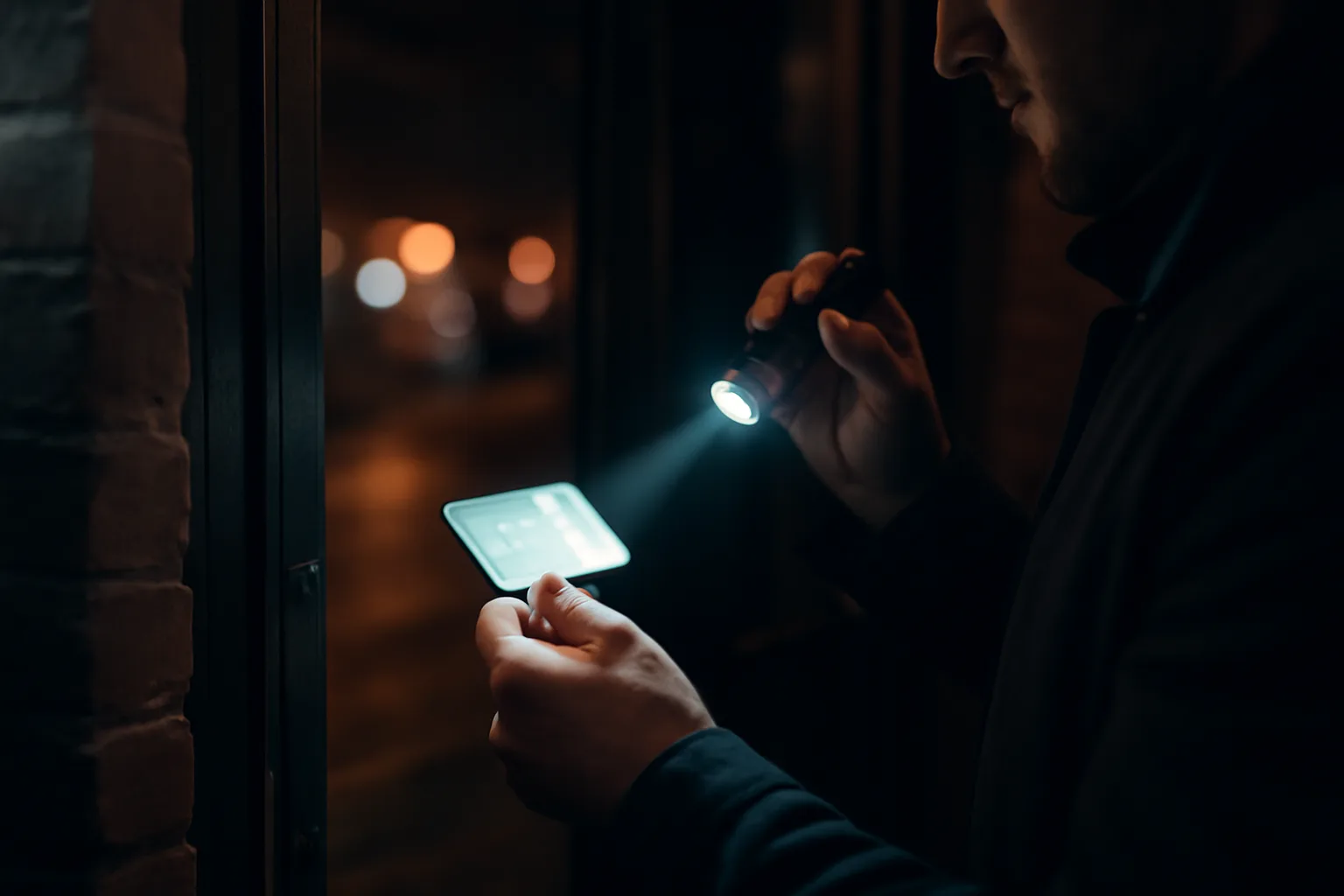
No, most bars and door staff will not accept an expired ID or driver's license, even if the photo still looks like you. State ABC rules and bar liability insurance push venues to require unexpired, valid government ID. A passport, military ID, or state ID card works if current. Some states give a short grace period after expiration, but it's not universal, so don't count on it.
can you get into a bar with an expired license?
Almost always, no. Bar staff and door security are trained to check the expiration date on any ID, more than the photo and birthdate. An expired driver's license technically stops being a valid form of identification the moment it lapses, and most state alcoholic beverage control (ABC) rules put the legal risk on the bar or restaurant, not the customer, if they serve someone who can't prove their age with current ID. That risk is the whole reason door staff get strict about this. If a bar serves a minor, or gets caught relying on expired ID as "good enough," the licensee can face fines, license suspension, or in repeat cases, revocation. States regulate this through their liquor control statutes and ABC enforcement divisions, and the penalties fall on the license holder, so most owners train staff to reject anything expired, cut, or damaged. A bouncer letting you in on an expired license isn't doing you a favor. He's putting the venue's liquor license on the line. Some states technically allow a grace period, often tied to renewal windows for driving purposes, but that's a DMV concept, not an ABC one. There's no federal standard here. If you're traveling or your ID lapsed a few weeks ago, don't assume it still works at the door. Bring a passport or get a temporary ID if you can.
why won't bars accept an expired id?
Bars refuse expired IDs because state liquor laws hold the license holder responsible for verifying a patron's current legal age, and an expired document doesn't reliably do that anymore. The expiration date exists precisely because appearance, weight, and even legal name can change; an ID that's five years past its date isn't a good proxy for "this is still you and you're still over 21." Separately, most state ABC agencies publish specific guidance on acceptable ID, and it almost always says "valid" or "unexpired" explicitly. Alcohol sales enforcement in the U.S. is largely a state and local matter under the 21st Amendment, which repealed Prohibition and gave states broad authority to regulate alcohol within their borders, including how retail sale and service is licensed and policed. States then write their own specific card requirements into statute or regulation, and Texas's code is a good example of how detailed and state-specific this gets [1]. Insurance carriers that write liquor liability policies also factor into this. A bar's dram shop liability exposure (the legal responsibility for over-serving or serving a minor) gets underwritten partly on how strict the venue's ID policy is. Owners who let expired IDs slide are taking on liability their insurer never priced in.
what ids are accepted to get into a bar?
Most bars accept a government-issued photo ID that is current (not expired), shows an accurate birthdate, and isn't visibly altered or damaged. The most common accepted forms are: - A state-issued driver's license, unexpired
- A state ID card (non-driver ID), unexpired
- A U.S. passport or passport card
- A military ID (for active duty and dependents in many states)
- A permanent resident card / green card Some states also accept tribal ID cards or foreign passports, but acceptance varies by state and by individual bar policy. Bars are legally allowed to be stricter than the statutory minimum. A venue can refuse a valid but unfamiliar out-of-state ID if staff aren't confident verifying it, and that's their right as a private business, even if the ID would technically pass legal muster elsewhere. If you're opening a bar or restaurant yourself, ID policy should be part of your staff training, tied to your state's specific rules on compliance and training. Get this wrong during a compliance check and it can jeopardize the license you spent months getting approved.
can you serve alcohol without a liquor license?
No. Serving or selling alcohol without the appropriate state and local liquor license is illegal in every U.S. state, and it exposes the business (and sometimes individuals) to criminal penalties, more than fines. Every state requires some form of on-premise retail license for a bar or restaurant that sells alcohol for consumption on site, and requirements are set at the state level, often layered with county or city rules on top. The federal side is narrower than most people think: under the Federal Alcohol Administration Act, the TTB requires a Federal Basic Permit only for producers, importers, and wholesalers of alcohol, not for retail bars and restaurants serving drinks to customers, a distinction laid out in 27 CFR Part 1 governing basic permit requirements for the industry [2]. Retail service is regulated almost entirely by the state ABC authority and local jurisdictions, which is why license types, costs, and quotas differ so much from state to state. Operating without the required state license, or serving after a license lapses, typically triggers steep fines and can lead to criminal charges for the operator in serious or repeat cases. States publish this directly: for instance, Texas's Alcoholic Beverage Code Chapter 101 makes it a criminal offense to sell alcohol without a permit or license, with penalties escalating for repeat violations [1]. If you're mid-application and your opening date is approaching, don't pour a single drink before your license is active. Confirm with your state ABC authority on exact effective dates.
how much is a liquor license?
| Direct state-issued license (non-quota state) | Often a few hundred to a few thousand dollars in state fees | Set by statute, varies by state and license class | |
|---|---|---|---|
| Quota-state license via transfer/auction | Can run tens of thousands to well over $100,000+ in some metro markets | Limited supply, market-driven price, tied to population quotas | |
| Beer & wine only vs. full liquor (spirits) | Beer/wine typically cheaper than full on-premise liquor | Full liquor licenses usually cost more and face tighter quotas | Quota states, where the number of full liquor licenses is capped by population under a formula set in state law, tend to have the highest secondary-market prices because supply is fixed and demand isn't. Non-quota states that issue licenses directly to qualified applicants for a flat statutory fee are usually far cheaper and faster. For a state-by-state breakdown of actual fee ranges and quota systems, check the state guides hub, and confirm current numbers directly with your state ABC authority before you budget, since fees change and older articles (including this one) can go stale on exact dollar figures. |
Liquor license costs vary enormously by state, license type, and whether you're buying new from the state or transferring an existing license on the open market. There's no single national number, and anyone quoting you one flat figure without asking what state and license class you need is guessing. Broadly, costs fall into three tiers: | Scenario | Typical Range | Why It Varies |
how much is a liquor license in florida?
Florida issues several different on-premise license series, and the cost depends heavily on which quota district you're in and whether you're getting a new license from the state or buying one on the transfer market. Florida's quota license system (the well-known "4COP" full liquor license) ties the number of available licenses per county to that county's population, under Florida Statutes Chapter 561 [3]. Because quota licenses are capped by county population and Florida counties vary hugely in size and growth, the transfer-market price for a 4COP quota license can range from relatively affordable in smaller rural counties to very expensive in dense urban counties like Miami-Dade or Orange County. There is genuinely no single accurate number to quote here; it depends on the county's current quota utilization and market conditions at time of purchase. Beer and wine licenses (like the 2COP series) are non-quota in most cases and cost far less, both in state fees and on the transfer market, since supply isn't artificially capped the same way. Before you budget for a Florida opening, confirm current fee schedules and quota availability directly with the Florida Division of Alcoholic Beverages and Tobacco [4], and don't rely on any fixed dollar figure you find online, including this one, without checking the current year's numbers. For related state licensing detail, see the florida bar guide.
how do i get a liquor license (or licence)?
Getting a liquor license generally means applying through your state's ABC authority (sometimes called the Department of Alcoholic Beverage Control, Liquor Control Board, or similar), and the process runs through a handful of predictable stages regardless of state. 1. Confirm your license type. Full liquor, beer/wine only, and on-premise vs. off-premise licenses all have different requirements and different costs. 2. Check quota status. In quota states, you may need to buy an existing license via transfer rather than apply for a new one, since the cap is already met in your area. 3. Prepare your application package. This usually includes business formation documents, lease or proof of location, floor plans, background checks on owners/managers, and sometimes local zoning sign-off. 4. Submit local and state approvals. Many jurisdictions require local government or community board approval before the state will issue the license. 5. Wait for review. Processing timelines vary widely by state and by how backlogged the agency is; some states publish target timeframes, but none guarantee approval by a specific date. The biggest planning mistake owners make is signing a lease and setting an opening date before confirming license timing. If your state's ABC authority has a multi-month backlog, and you've already told your landlord and staff you're opening in six weeks, you've built a deadline you can't control. Back-plan from your target opening date, not forward from your lease signing, and build in real buffer time. If you want a structured way to map out that timeline against your specific state's requirements, that's exactly the gap the State Liquor License Roadmap is built to fill: a $199 one-time tool that lays out the license type, quota status, and application sequence for your state so you're not guessing at the backlog.
how do i get a bartending license?
Most states don't require a personal "bartending license" at all; instead, they require alcohol server/seller training certification, and requirements vary by state, sometimes down to the county. States like Oregon and Washington mandate server training for anyone who sells or serves alcohol, while others leave it optional unless the employer or insurer requires it. The common path is: - Check whether your state mandates certification (some do, some don't; confirm with your state ABC authority)
- Take an approved responsible beverage service course, often available online, covering checking ID, spotting fake IDs, recognizing intoxication signs, and legal serving limits
- Pass a short exam (usually multiple choice)
- Receive a certificate valid for a set number of years, after which you recertify This is different from a business's liquor license, which is held by the establishment, not the individual bartender. A bartender's certification proves they're trained to serve responsibly; the bar's liquor license is the legal permission for the business to sell alcohol at all. For hiring and training planning, see the compliance and training resources for state-specific server training rules.
can anyone take the bar exam?
This question usually comes up because of the word "bar" overlapping with alcohol licensing searches, but it refers to something completely different: the legal bar exam that lawyers take to get licensed to practice law. It has nothing to do with liquor licenses. To sit for the bar exam in most U.S. states, a candidate generally needs to have graduated from an ABA-accredited law school (with some state-specific exceptions for law office study or foreign-trained attorneys), and each state's bar admission authority sets its own eligibility rules. The American Bar Association accredits law schools nationally, but bar admission itself is handled state by state through each state's supreme court or bar admission board. If you landed here looking for information on becoming a lawyer, check your specific state's bar admission requirements, since eligibility rules (educational background, character and fitness review, jurisdiction reciprocity) differ meaningfully. For Florida specifically, requirements run through the florida bar, and you can look up current attorney status through the florida bar member search. None of this overlaps with alcohol licensing for restaurants and bars, which is a separate state ABC process entirely.
what happens if you get caught serving without a valid license?
Consequences for serving alcohol without a current, valid license range from civil fines to full license revocation to criminal charges, and the exact penalty depends entirely on your state's alcoholic beverage code. This applies whether the license fully lapsed, was suspended, or never existed in the first place. Most state ABC statutes treat unlicensed sale of alcohol as a distinct offense from other liquor violations, often with escalating penalties for repeat offenses. Texas, for example, classifies selling alcohol without the required permit as a criminal offense under its Alcoholic Beverage Code Chapter 101, with penalty severity increasing on subsequent violations [1]. Other states structure this similarly: a first offense might draw a fine and a compliance order, while repeated or willful violations can mean the business loses its ability to ever hold a license in that jurisdiction again. If your license is up for renewal and there's any chance of a lapse (paperwork delay, unpaid fee, pending violation review), stop serving alcohol until it's confirmed active again. A short gap in coverage, even an honest administrative one, can turn into a much bigger enforcement problem than the missed renewal itself. Confirm renewal status directly with your state ABC authority rather than assuming a grace period exists; not all states have one, and the ones that do define it narrowly.
how does an expired liquor license affect a bar's opening date?
If you're opening a new bar or restaurant and your liquor license application is delayed, expired, or stuck in renewal limbo, you cannot legally serve alcohol until the license is active, no matter what your lease or staffing schedule says. This is one of the most common planning failures new operators make: setting a public opening date before the license timeline is locked in. Back-planning from your target opening date means working backward through every required step, local approval, state review, background checks, quota transfer paperwork if applicable, and building in real buffer for each stage, since almost none of them move faster just because you have a lease deadline. States don't expedite ABC review because your landlord wants rent starting on time. A practical rule: assume the license process will take longer than the state's published estimate, especially in quota states or during backlog periods, and don't announce a hard opening date to the public until your license is either issued or you have written confirmation of imminent approval from your ABC authority. Soft-opening as a food-only concept while the license clears is a common, legal workaround many operators use to keep revenue moving without serving alcohol illegally.
Frequently asked questions
Can I get into a bar with an expired license?
Almost never. Bars check expiration dates specifically because state law holds them liable for serving someone whose current age they can't verify. An expired driver's license, even with the correct photo and birthdate, typically won't be accepted. Bring a current passport, military ID, or renewed state ID instead, or find out if your state offers any documented grace period for recently expired IDs.
How much is a liquor license?
It depends heavily on your state, license type, and whether you're buying new from the state or via transfer in a quota state. Direct state fees can run from a few hundred to a few thousand dollars; quota-market transfer prices in busy metro areas can run tens of thousands to over $100,000. Confirm exact current fees with your state ABC authority.
How do I get a bartending license?
Most states require alcohol server training certification rather than a personal "bartending license." Requirements vary by state; some mandate it, some don't. You typically take an approved responsible beverage service course online or in person, pass a short exam, and get a certificate valid for a set number of years before recertification is needed.
How can I get a liquor license for my bar or restaurant?
Start by confirming your license type and whether your state uses a quota system for your area. Then prepare your application package (business documents, lease, floor plan, background checks), get any required local approval, and submit to your state ABC authority. Processing timelines vary widely, so back-plan from your opening date, not forward from your lease signing.
How do I obtain a liquor license if my area is quota-restricted?
In quota states, if the cap for your county or district is already met, you generally can't apply for a brand-new license and instead must buy or transfer an existing one on the open market. Prices vary based on local demand and quota scarcity. Confirm current quota status with your state ABC authority before assuming a new license is even available.
How much is a liquor license in Florida?
It depends on the license type and county. Florida's 4COP full liquor licenses are quota-capped by county population under Florida Statutes Chapter 561, so transfer-market prices vary widely, cheaper in smaller counties, expensive in dense urban ones. Beer and wine licenses are typically non-quota and cost far less. Confirm current numbers with Florida's Division of Alcoholic Beverages and Tobacco.
Can anyone take the bar exam?
This refers to the legal bar exam for lawyers, unrelated to liquor licensing despite the name overlap. Most states require graduation from an ABA-accredited law school plus a character and fitness review before you can sit for the exam. Each state's bar admission authority sets its own specific eligibility rules, so check your target state's requirements directly.
Can you serve alcohol without a liquor license?
No. Every U.S. state requires a specific retail liquor license to legally sell or serve alcohol on-premise, and operating without one is a criminal offense in most states, more than a civil fine. The TTB only requires federal basic permits for producers, importers, and wholesalers, so retail bars and restaurants are regulated almost entirely at the state and local level.
Does an expired ID ever work at a bar if I look old enough?
No, appearance doesn't matter legally. Door staff and bartenders are trained to check the expiration date regardless of how old you look, because state ABC rules hold the bar liable for accepting invalid ID, more than for serving someone underage. An expired ID is treated as no ID in most enforcement contexts.
What ID is accepted to get into a bar or buy alcohol?
Commonly accepted forms include a current, unexpired state driver's license, state ID card, U.S. passport or passport card, and military ID. Acceptance of tribal IDs, foreign passports, or out-of-state IDs varies by bar policy, since venues can legally set stricter ID standards than the statutory minimum.
What happens if a bar gets caught serving without a valid license?
Penalties range from fines to license suspension or revocation, and can include criminal charges for the operator depending on the state. Some states escalate penalties sharply for repeat violations. If your license lapses during renewal, stop serving until it's confirmed active again rather than assuming a grace period applies.
Is there a grace period for an expired driver's license at a bar?
Not universally. Some states allow short administrative grace periods for driving purposes after a license expires, but that's a DMV concept and doesn't automatically extend to ID acceptance at bars. Most venues, worried about liability, will not accept an expired ID at the door regardless of any DMV grace period. Bring a current passport or renewed ID to be safe.
Sources
- U.S. Const. amend. XXI, Cornell Legal Information Institute: The 21st Amendment repealed Prohibition and gave states broad authority to regulate alcohol within their borders, the basis for state-level ABC control
- 27 CFR Part 1, Basic Permit Requirements: Federal Basic Permit requirements apply to producers, importers, and wholesalers, not retail bars and restaurants
- Texas Alcoholic Beverage Code, Chapter 101 (Enforcement): Selling alcohol without the required permit or license is a criminal offense in Texas, with penalties escalating for repeat violations
- Florida Statutes, Chapter 561 (Beverage Law: Administration): Florida's quota license system ties the number of available full liquor (4COP) licenses to county population
- Florida Division of Alcoholic Beverages and Tobacco: State authority for confirming current Florida liquor license fees and quota availability
- American Bar Association, Model Rule on Admission (Section of Legal Education): The American Bar Association accredits law schools nationally, while bar admission eligibility is set state by state