Last updated 2026-07-26
TL;DR
A driver's license bar code (technically a PDF417 2D barcode on the back) stores the same data printed on the front: name, birth date, license number, and expiration. Bars scan it to verify age fast and catch fake IDs. It does not replace your liquor license, but ID scanning is often tied to compliance training requirements tied to that license.
What is the bar code on the back of a driver's license?
The bar code on the back of a US driver's license is almost always a PDF417 symbol, a stacked linear bar code format that can hold a few hundred characters of text in a small space. It is not a QR code, though people use that term loosely. The American Association of Motor Vehicle Administrators (AAMVA) publishes the technical standard that most states follow for what goes into that bar code, called the DL/ID Card Design Standard [1]. The data encoded typically mirrors what is printed on the front and back of the card: full legal name, address, date of birth, sex, height, eye color, license number, issue and expiration dates, and license class or restrictions. Some states also encode a document discriminator number used for record matching. Nothing in the standard bar code payload includes criminal history, credit information, or biometric data, despite a persistent myth that scanning a license pulls up more than what is on the card. A magnetic stripe used to be common on older licenses too, and some states still use one alongside the bar code, but the 2D bar code is now the dominant machine-readable format nationwide because it is cheaper to print and holds more data than a mag stripe [1].
Why do bars and restaurants scan driver's license bar codes?
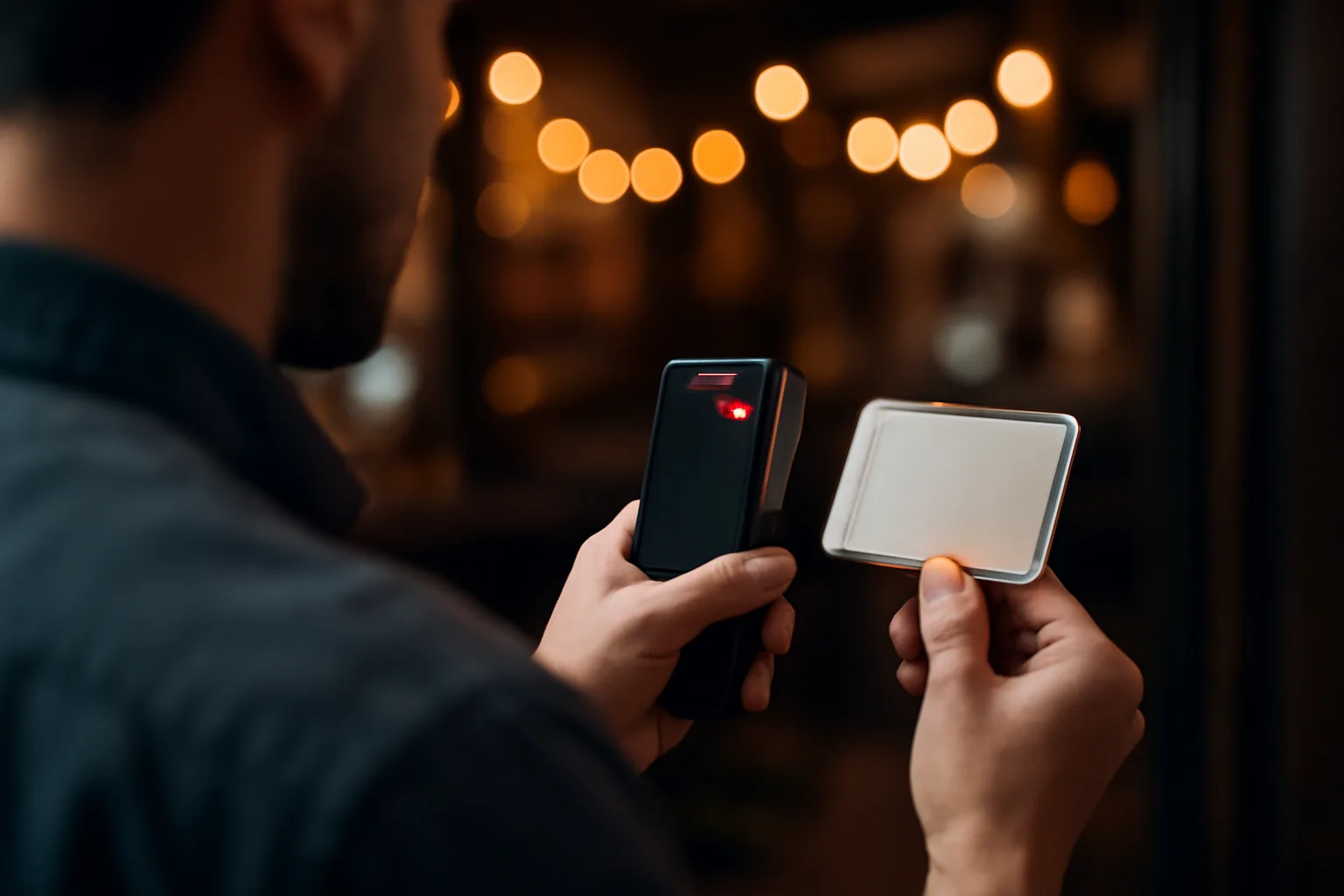
Bars scan IDs mainly for two reasons: speed and fraud detection. A bouncer or bartender doing pure visual inspection at 1 a.m. on a busy Saturday is going to miss altered birth dates and decent fake IDs. A scanner reads the encoded data and instantly flags a mismatch between what is printed and what is encoded, which is exactly how most low-effort fakes get caught, since forgers often update the printed numbers but not the bar code data (or vice versa). The second reason is liability. Nearly every state's alcohol beverage control (ABC) code holds the licensee responsible for sales to minors regardless of whether the ID looked convincing, though most states also offer some form of affirmative defense if the seller checked a valid-looking government ID in good faith. Documenting that check (scan logs, timestamp, employee ID) is one of the few things an operator can point to after the fact. Insurers matter here too. Many liquor liability policies either require or give premium discounts for electronic ID verification systems at the door, on top of whatever your state ABC authority separately requires for training.
Can you serve alcohol without a liquor license?
No. Selling or serving alcoholic beverages without the required state and, in most places, local liquor license is illegal in every US state and typically charged as a criminal misdemeanor or felony depending on the jurisdiction and prior offenses. The federal side matters too: anyone in the business of producing, importing, or wholesaling alcohol also generally needs a Federal Basic Permit from the Alcohol and Tobacco Tax and Trade Bureau (TTB) under the Federal Alcohol Administration Act, 27 U.S.C. 203, though most retail bars and restaurants selling only to consumers on premise are regulated at the state and local level rather than needing a TTB basic permit themselves [2]. State ABC agencies actively enforce this through undercover compliance checks, and penalties for unlicensed sales usually include the alcohol being seized, the business ordered closed, and fines that can run into the thousands of dollars per violation, plus the operator being barred from getting a license later. If you have a lease signed and an opening date targeted, treat the license timeline as the actual critical path for opening, not the buildout schedule. A lot of first-time operators get the kitchen and dining room ready and then discover the license review alone eats 60 to 120 days or more depending on the state and whether it is a new license or a transfer. If you are still mapping out which license type you need, whether a full liquor license, beer-and-wine only, or a quota-restricted license in a control state, that decision shapes everything downstream: cost, timeline, and whether you are competing for a limited pool of licenses at all.
How much is a liquor license?
There is no single national number, and anyone who quotes you one flat figure without asking your state is guessing. Liquor license costs vary by state, by license type, and often by county or population tier within a state, and they range from a few hundred dollars for a beer and wine permit in a low-fee state up to six figures for a full liquor license in a quota-restricted market where licenses are bought and sold on a secondary market because the state caps how many exist. A few things drive the spread. First, whether the state issues licenses freely (an 'open' or non-quota system) or caps them by population or county (a 'quota' system). Quota states like some license categories in New Jersey can see private resale prices for existing licenses run well into six figures in dense areas, because demand far outstrips the fixed supply the state allows [3]. Second, whether you are getting a brand-new license from the state (cheaper, but often not available if the quota is full) versus buying/transferring an existing license from another business (pricier, since you are paying market value plus transfer fees). Third, license class: full liquor (beer, wine, spirits) costs more than beer-and-wine-only in almost every state. Because the range is so wide and the fee schedules change, confirm the actual current fee with your state ABC authority before you budget anything. Every state ABC website publishes a current fee schedule, and that document is the only reliable source, not a blog post repeating last year's numbers.
How much is a liquor license in Florida?
Florida's system runs through the Division of Alcoholic Beverages and Tobacco (ABT), part of the Department of Business and Professional Regulation, and it uses a quota system for the most common full liquor license type, the 'quota' license (sometimes called a 4COP license), which is capped based on county population under Florida Statutes section 561.20 and only released as population grows or through the state's periodic quota drawing [4]. Florida also issues non-quota license types that do not require winning a lottery or drawing, including licenses for certain restaurants that meet minimum seating and food service requirements (often referenced informally as SRX or SFS licenses), and specialty licenses tied to things like hotels or certain size venues. State-issued application and license fees for these vary by category and by county, and existing quota licenses transferred on the private market in dense Florida counties like Miami-Dade or Broward have sold for well into six figures historically because supply is fixed and demand is high [4]. Because exact current fee amounts, quota counts by county, and drawing schedules change and are set by statute and by DBPR rule, confirm the specific dollar figures and current quota availability directly with Florida's ABT division before budgeting [4]. If you are researching Florida specifically, the Florida bar guide and the state's own license search tools page (note: that resource covers attorney licensing, not liquor licensing, so don't confuse the two if you land there searching 'Florida bar') are worth separating clearly in your research folder.
How do I get a liquor license (step by step)?
The mechanics are broadly similar across states even though the forms and fees differ. Roughly, you: confirm your local zoning allows alcohol sales at that address, apply with your city or county for any local approval required, apply to the state ABC authority for the state license, pass any required background check and financial disclosure, get a state and sometimes local inspection, and post any required public notice period before final approval. A few state-specific quirks matter a lot. Some states require the license to be tied to a specific physical location and won't process the application until you have a signed lease or deed, which is why timing your lease signing against the license timeline matters so much. Some states require a local hearing or public comment period, especially in quota systems or for licenses near schools and churches, which can add weeks. And states with quota systems may require you to either wait for a new license allocation or find an existing license holder willing to sell and transfer. Working backward from your opening date is the practical way to plan this: pick your target open date, ask your state ABC authority for a realistic current processing time estimate (not a best-case one), and count back from there including time for corrections if your application is returned incomplete, which happens often on first submissions. This is exactly the kind of back-planning we built the $199 State Liquor License Roadmap around: a one-time tool that maps the license steps, likely costs, and typical timeline windows for your specific state against your opening date, so you're not discovering the license is the bottleneck two weeks before you planned to open.
How do I obtain a liquor licence (transfers vs new applications)?
If you're buying an existing bar or restaurant, or taking over a lease where alcohol was previously sold, you're usually looking at a license transfer rather than a brand-new application, and the process is different in important ways. A transfer moves an existing license from one owner or one location to another (rules vary on whether your state allows location transfers, ownership transfers, or both), and it generally still requires the new owner to pass the same background and financial checks as a fresh applicant. Transfers are common in quota states specifically because new licenses are capped, so if you want a full liquor license in a county where the quota is full, buying an existing one from a willing seller and transferring it is often the only path in. Expect the state to require the transfer to close only after its own approval, meaning you generally cannot serve alcohol under the old license the day you take possession of the space; there is a gap where the license is genuinely dormant during review unless your state allows a temporary permit to bridge it. For quota and transfer mechanics specifically, including how secondary-market pricing works and what due diligence to do on a license before you agree to buy it, that is worth reading in full before you sign anything committing to purchase an existing license.
How do I get a bartending license, and is that the same as a liquor license?
No, and this mix-up trips up a lot of new operators. A 'bartending license' almost always refers to individual alcohol server or seller training and certification, not the business's liquor license. Many states require anyone who serves or sells alcohol to complete a responsible beverage service training course and carry a certificate or card, sometimes called a TIPS certification, ServSafe Alcohol certification, or a state-specific name (Oregon's OLCC service permit, Washington's MAST permit, and similar programs in other states) [5]. These individual certifications are usually cheap, often $10 to $40 per person depending on the course provider and state, and take a few hours online or in person, a world apart from the business-level liquor license cost. Some states mandate this training for every server; others leave it optional but insurers and many corporate operators require it anyway because it strengthens the legal defense if a server is later accused of over-serving or serving a minor. Oregon requires this under its statutory alcohol server education program: Oregon Revised Statutes 471.402 directs the Oregon Liquor and Cannabis Commission to require service permits for anyone who sells or serves alcoholic beverages, and the agency's rules set the training and renewal cycle [5]. Check your specific state ABC authority's server training requirements, since some states make it a legal requirement to hold a current permit before pouring a drink, while others treat it as a best practice rather than a mandate.
Can anyone take the bar exam?
This question shows up in liquor license research purely because of the word 'bar,' and it's a completely different topic: the bar exam is the licensing test for practicing law, administered by state bar authorities, and has nothing to do with alcohol licensing. Eligibility rules are set state by state through each state's board of bar examiners or state bar association, and generally require graduation from an ABA-accredited law school (or in a handful of states, an approved alternative like a specific number of years reading law under a supervising attorney) [6]. So no, not literally anyone can sit for the bar exam; you need to meet your state's educational and character-and-fitness requirements first, which is a process run entirely separately from any state's alcoholic beverage control division. If you landed here searching 'bar exam' while actually trying to figure out liquor licensing, the terms just happen to share a word. For actual attorney licensing questions, your state's bar association website (not the ABC agency) is the right source, and resources like the Florida bar or California bar pages cover that separately from anything alcohol-related.
What happens if a bar scans a fake or altered driver's license?
A good scanner checks the printed data against the encoded bar code data and flags a mismatch, an expired date, or a format that doesn't match a valid state template, but no scanner is foolproof against a well-made fake that has both printed and encoded fields altered consistently. Staff training still matters more than the hardware. Most states require staff to refuse service and, in many states, are permitted or required to confiscate an ID reasonably believed to be fraudulent, then report it to law enforcement rather than the customer's home. State ABC compliance check programs (undercover minors sent in by the agency) are the main enforcement mechanism nationwide, and a bar that fails a compliance check even with a scanner in place can still face license suspension, fines, or in repeat cases, revocation, since the scanner is a tool, not a legal shield. This is one more reason server training and the business license itself are linked in practice even though they're legally separate things: a state can condition license renewal on completed staff training, or increase penalties for violations at a location where staff clearly weren't trained on ID checks at all.
Does using an ID scanner satisfy compliance training requirements?
No. An ID scanner is a piece of equipment; compliance training is a legal requirement for the people. States that mandate responsible beverage service training require the individual server or bartender to complete and hold the certification regardless of what door hardware the business owns. Owning a scanner can reduce liability risk and speed up service, but it does not substitute for the certificate your state ABC authority requires from each employee who sells or serves alcohol. For a compliance and training overview of what's typically required at the state level, employee versus business level, and how renewal cycles usually work, that's the right next stop, especially if you're staffing up before an opening date and need to figure out how many weeks of lead time the training requirement adds to your hiring plan.
Frequently asked questions
How much is a liquor license?
It depends entirely on your state, county, and license type, ranging from a few hundred dollars for beer-and-wine permits in open-license states to six figures for full liquor licenses resold in quota-restricted markets. Confirm the current fee schedule with your specific state ABC authority since there is no accurate flat national number [3].
How much is a liquor license in Florida?
Florida uses a quota system for full liquor (4COP) licenses tied to county population through the Division of Alcoholic Beverages and Tobacco, with non-quota license types available for qualifying restaurants and specialty venues. Exact fees and quota availability vary by county and change over time, so confirm current figures directly with Florida ABT [4].
How do I get a bartending license?
Most states require a responsible beverage service certification (like TIPS or ServSafe Alcohol, or a state program such as Oregon's OLCC permit or Washington's MAST permit) rather than a 'bartending license' from the state. Courses typically cost $10 to $40 and take a few hours; check your state ABC authority for whether it's mandatory [5].
How can I get a liquor license?
Confirm zoning allows alcohol sales at your address, apply for any required local approval, then apply to your state ABC authority with financial disclosures and background checks, and complete required inspections and public notice periods. Timelines and required steps vary widely by state; ask your state ABC agency for realistic current processing estimates before setting an opening date.
How do I obtain a liquor license as a new business?
You apply directly to your state's ABC authority (and often your city or county too) as a new applicant if the state has open licenses available in your category. In quota states where the cap is full, a new application may not be possible, and buying an existing license via transfer becomes the practical path instead.
How do I obtain a liquor licence if I'm buying an existing bar?
You typically apply for a license transfer rather than a fresh license, since the existing business holds a license you're taking over along with the ownership or location. The new owner still generally must pass the same background and financial review as a new applicant, and the transfer needs state approval before you can legally sell alcohol.
Can you serve alcohol without a liquor license?
No. Selling or serving alcohol without the required state and local license is illegal everywhere in the US and can lead to criminal charges, fines, seizure of alcohol, forced closure, and being barred from future licensing. Enforcement happens through state ABC compliance checks and local inspections.
Can anyone take the bar exam?
No, this refers to the attorney licensing exam, unrelated to alcohol licensing. Eligibility is set state by state, generally requiring graduation from an ABA-accredited law school or an approved alternative path, plus meeting character and fitness requirements through your state's bar admissions authority.
What is actually encoded in a driver's license bar code?
Most US states follow the AAMVA DL/ID Card Design Standard, encoding a PDF417 bar code with the same data printed on the card: name, address, date of birth, license number, issue/expiration dates, and license class. It does not include criminal history or biometric data [1].
Do bars legally have to scan IDs?
Generally no state requires ID scanning by law, but many bars use scanners voluntarily for speed, fraud detection, and liability protection, and some liquor liability insurers offer discounts for using them. Server training and age verification checks themselves are usually the actual legal requirement, not the specific hardware used.
Is a bartending certificate the same as a liquor license?
No. A bartending or server certificate (like ServSafe Alcohol or TIPS) certifies an individual employee completed responsible service training. A liquor license is a separate legal authorization issued to the business by the state ABC authority allowing alcohol sales at that location.
How long does it take to get a liquor license before opening?
There's no universal number; it depends on your state, whether it's a new license or transfer, and whether a public hearing or quota wait applies. Ask your state ABC authority for current typical processing windows and back-plan your opening date from that estimate rather than your construction schedule alone.
Sources
- AAMVA, DL/ID Card Design Standard: Most US driver's licenses use a PDF417 bar code encoding standard data like name, DOB, and license number, per AAMVA's design standard
- 27 U.S.C. 203, Federal Alcohol Administration Act, basic permit requirement: Producers, importers, and wholesalers of alcohol generally need a Federal Basic Permit under the Federal Alcohol Administration Act; retail on-premise sellers are primarily regulated at state and local level
- New Jersey Division of Alcoholic Beverage Control, License Types and Fees: Quota-restricted liquor licenses in high-demand areas can resell for far above their original issuance fee due to fixed supply and high demand
- Florida Statutes section 561.20, Limitation upon number of licenses issued: Florida issues quota liquor licenses tied to county population under Florida Statutes 561.20, alongside non-quota licenses for qualifying restaurants and specialty venues
- Oregon Revised Statutes 471.402, Alcohol server education program: Oregon requires individual alcohol servers to complete state-mandated server education and hold a permit before serving alcohol under ORS 471.402
- American Bar Association, Bar Admissions Guide: Bar exam eligibility is set state by state and generally requires graduation from an ABA-accredited law school or an approved alternative path